Predictive Health vs. Traditional Tracking: Why Logging Isn’t Enough Anymore
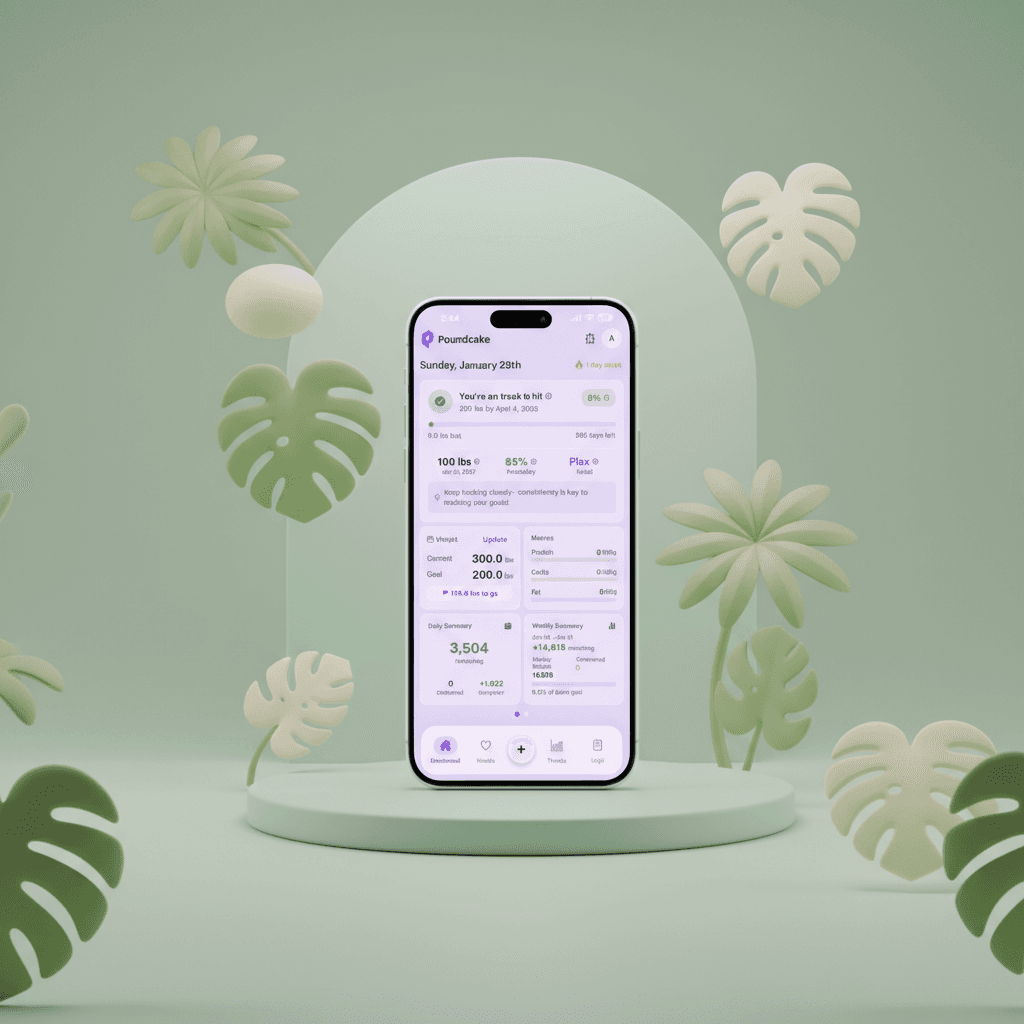
For more than a decade, most health apps have followed the same formula: log what you eat, record your weight, close your rings, repeat. The assumption is simple — if you track your behavior closely enough, results will follow.
But logging alone doesn’t answer the question people actually care about:
“Am I going to hit my goal?”
Traditional tracking tools are reactive. Predictive health is proactive. And that difference changes everything.
The Problem With Reactive Tracking
Most apps show you what already happened.
You consumed 1,850 calories yesterday.
You walked 7,200 steps.
Your weight dropped 0.4 pounds this week.
That data can be helpful — but it’s backward-looking. It doesn’t tell you what happens next.
If your weight stalls for a few days, is that normal?
If you go over calories on the weekend, are you still on track?
If you hit your target intake 80% of the time, will you reach your goal by summer?
Reactive tracking leaves interpretation up to you. And most people aren’t equipped with the modeling background to translate raw logs into realistic forecasts.
The result? Uncertainty, anxiety, and often quitting.
What Predictive Health Does Differently
Predictive health shifts the focus from logging inputs to forecasting outcomes.
Instead of asking:
“What did I eat today?”
It asks:
“If I keep behaving like this, where will I be in 30, 60, or 120 days?”
By analyzing patterns in your own historical data — weight trends, adherence consistency, behavioral rhythms — predictive systems can estimate:
Your projected goal date
Your expected weight at a future point in time
Your probability of reaching your target
How deviations impact your timeline
This transforms tracking from a diary into a decision engine.
Why Forecasting Changes Motivation
Uncertainty kills momentum.
When progress feels random, people assume they’re failing — even when they’re not. Small fluctuations get overinterpreted. A single off day feels catastrophic.
Predictive modeling reframes progress as a trajectory rather than a moment.
Instead of reacting emotionally to daily noise, you see the trend.
Instead of guessing whether you’re on track, you know.
Instead of hoping you’ll be ready for summer, you see the forecast.
That clarity reduces stress and increases consistency.
Personalized Modeling Beats Generic Targets
Traditional trackers rely on static assumptions:
Fixed calorie deficits
Linear weight loss expectations
Population averages
But weight change isn’t linear. Behavior isn’t perfectly consistent. And no two people respond the same way to identical inputs.
Predictive systems adapt to you.
They learn your adherence patterns.
They account for weekend variability.
They adjust expectations based on real-world behavior.
This creates a more realistic, sustainable forecast — one that reflects your actual life, not an idealized plan.
From Tracking to Strategy
When you can see your projected outcome, you gain leverage.
If your forecast shows you’re on pace, you maintain confidence.
If it shows you’re slightly behind, you make a small adjustment — earlier, not later.
If a vacation week shifts your timeline by three days instead of three months, panic disappears.
The goal becomes predictable.
And predictability changes how people behave.
The Future of Weight Management
Logging isn’t useless — it’s foundational. But logging without forecasting is incomplete.
The next generation of health technology won’t just record your actions. It will interpret them. It will anticipate outcomes. It will model progress forward.
Because the real question isn’t:
“What did I do yesterday?”
It’s:
“Where am I going?”
Predictive health answers that — and once you can see where you’re going, staying consistent becomes a lot easier.